
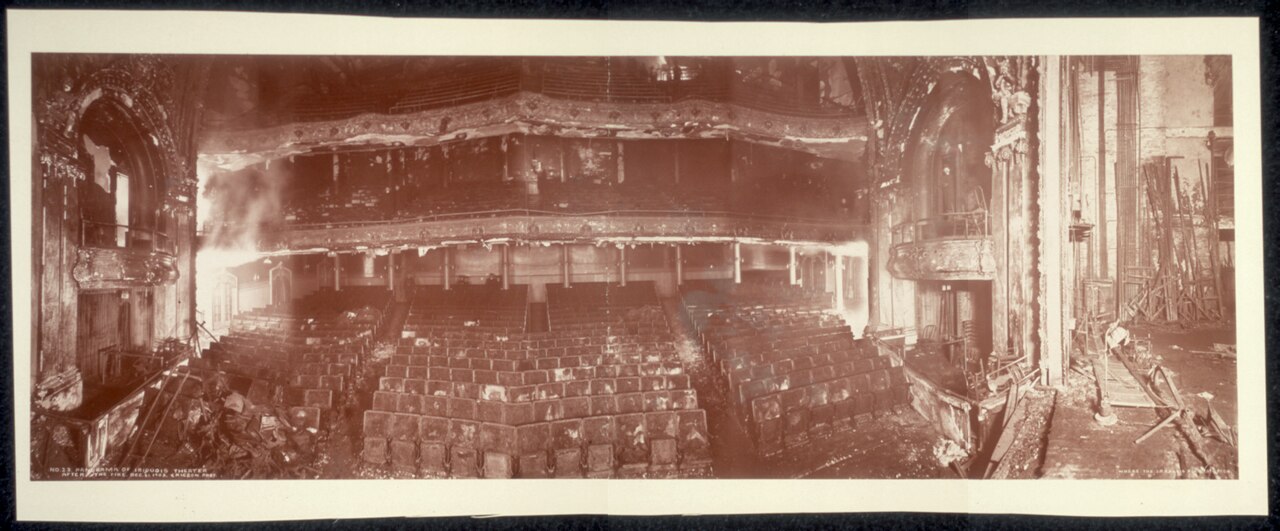
Chicago’s Iroquois Theater after the fire, Dec. 31, 1903
How to Kill Your Characters with (Realistic) Fire
CW: detailed discussion of deadly fires
The movie Backdraft has gorgeous scenes in rooms full of flames. In real life, unfortunately, everyone in those scenes would die in about five different horrible ways. So here’s how to kill your characters with more realistic fire.
The worst place for a fire
Let’s start with what Backdraft got right. In 1973, an indoor recreation complex called Summerland on the Isle of Man had a small fire that spread into a space between walls. Believe it or not, that fire was more deadly because it stayed small far too long.
A fire in an enclosed space (storage locker, attic/stairwell, tiny room) literally can’t breathe. Well, isn’t that what you want? Unfortunately, no. A fire with just enough oxygen creates superheated smoke full of unburned particles just waiting for the fuel they need to ignite. When the fire finally gets a deep breath—you know those fiery explosions in Backdraft? Yeah. Actually a real thing. (In fact, any fire that gets a sudden influx of oxygen can create a fireball.) And now you’ve got a building full of roaring fire and people who hadn’t known to evacuate.
So whether you’ve got a stealth fire or just a room full of flammable materials and some poor idiot lights pyrotechnics, let’s look at the obstacles your characters face on the way out.
Smoke
It sounds like an urban legend: people found dead still sitting in their seats, entirely untouched by fire. But it happened in 1942, at a Boston nightclub called the Cocoanut Grove. In fact, a common way to die in fires involves no fire at all: asphyxiation. Nearby flames can quickly eat up all the oxygen in a room. Smoke not only makes it impossible to see anything, but contains carbon monoxide and all sorts of toxic gases. And just a few breaths of superheated air can burn your throat until it swells shut.
Which brings us to the number one thing fire movies (except Silent Hill my beloved) get wrong:
Heat
Backdraft is so dramatic with its flaming sets. But it’s actually not the case that you can hang out in a burning room so long as you don’t touch flames. (Not to be too graphic, but your oven cooks things just fine without fire.) After the Cocoanut Grove, a firefighter was asked how he burned his hands and face without encountering flames. “That was due to the heat,” he answered. “We get that quite often” (Fire Commission Inquest testimony, Vol 1 p. 17).
In 1944, a huge wax-coated circus tent caught fire in Hartford, Connecticut. Survivors untouched by flames found they had massive thermal burns beneath their clothes (O’Nan, 227). Survivors of the Peshtigo, Wisconsin (1871) wildfire found unburned root cellars helpfully contained potatoes already baked by the intense heat.
Heat doesn’t show up on film, but in a real fire, it’s a sure killer. And that’s normal fire heat. In a structure fire, where flames can’t vent to the sky, you’re likely to get the worst heat imaginable:
Flashover
In 1903, the deadliest structure fire in US history occurred at the Iroquois Theatre in Chicago, which was advertised as “absolutely fireproof.” And by gosh, it was. The next morning, that building was still standing. It was just everything inside that burned, including 602 people.
The freakiest fire phenomenon of all starts with certain ingredients. Remember those toxic gases? Well, they come from that “everything inside.” Burning curtains, furniture, paint, decorations, soundproofing, and more give off gases that accumulate at the ceiling, until the heat rises enough to ignite them—along with every other object (and person) in the room, all at the exact same instant. Flashover.
People who survive flashover [CW: burn scars] lose just about everything except their lives, including fingers, ears, eyes, noses, and hair. Unsurprisingly, you don’t normally get surviving witnesses to flashover, but at the Our Lady of the Angels school fire in Chicago (1958), a firefighter outside a window described victims’ white shirts turning brown with heat right before flashover nearly blew him off his ladder, minus his eyebrows (Cowan & Kuenster, 80).
So basically, in a fire, it’s get out or die trying, which brings us to:
Exits
In a high-pressure situation, most people will attempt to leave by the same door they came in, which is usually the same door everybody else came in. So there’s going to be a line. Fire codes demand other exits be available: that’s why exit signs are bright enough to be seen (for a few minutes, anyway) through smoke, why doors are alarmed rather than locked, why doors open outward, why exit routes don’t go down slopes, over open stairs, through hallways with blind corners, or involve two streams of people meeting; why revolving doors have regular doors beside them. (People always call for expanded safety codes after a fire, but the truth is if current fire codes were enforced, we’d be fine.)
It’s a huge pet peeve of mine to victim-blame by calling fire behavior “panic [pdf].” In reality, people escaping a fire are usually calm and helpful (Clarke, 23). It is entirely rational for people at the back of an exit line to rush forward as the fire nears them. But if that exit’s got issues, and people in the back move faster than people in the front, then you get a pileup. (I won’t link to it, but you can see a pileup in videos of The Station fire. Serious content warning.) A pileup is a group of people fallen horizontally on top of each other, stacked nearly to the ceiling, where they die of fire, smoke, or crush asphyxiation. It is nearly impossible to rescue a person from a pileup (Barylick, 103), and people behind them are out of luck.
Bottom line: in a fire, exits matter most.
Thanks for reading! Find some great resources below on the structure fires mentioned or linked to in this article.
And a final note: the best time to leave a burning building is before the fire starts. If you find yourself in an overcrowded place with wonky exits: just leave. At the first sign of smoke or fire, leave, and not by the main door. Better to “overreact” than not get out at all.
Sources & Further Reading
The Iroquois Theatre: Chicago, 1903

BOOKS
Theatre Fires and Panics: Their Causes and Prevention: William Paul Gerhard. Public domain book—read online
Chicago’s Awful Theater Horror: various authors. Public domain book—read online
Chicago Death Trap: The Iroquois Theatre Fire of 1903: Nat Brandt
Tinder Box: The Iroquois Theatre Disaster 1903: Anthony P Hatch
LINK
Iroquois Theater Fire official website
The Triangle Shirtwaist Factory: New York, 1911
BOOKS
The Triangle Fire: Leon Stein
Flesh and Blood So Cheap: The Triangle Fire and Its Legacy: Albert Marrin
Triangle: The Fire That Changed America: David von Drehle
LINK
Remembering the 1911 Triangle Shirtwaist Factory Fire: Cornell

Triangle Waist Company 9th floor after the fire
The Morro Castle (ship): at sea near Long Beach Island, New Jersey, 1934

Steamship Morro Castle on fire September 8, 1934
BOOKS
Shipwreck: The Strange Fate of the Morro Castle: Max Morgan-Witts and Gordon Thomas
When the Dancing Stopped: The Real Story of the Morro Castle Disaster and Its Deadly Wake: Brian Hicks
LINK
The Morro Castle Disaster: Vintage Asbury Park
The Rhythm Club: Mississippi, 1940
LINK
The Natchez fire : a profile of African American remembrance in a small Mississippi town: Vincent Joos

Memorial to the victims of the Rhythm Club fire
The Cocoanut Grove: Boston, 1942

The Cocoanut Grove on fire, November 28, 1942
You can read my sci-fi/horror story “The Burning Basement Sky” in The Summer of Sci-Fi and Fantasy Vol 5! Based on the Cocoanut Grove: time travel to a historic nightclub fire goes awry.
BOOKS
Fire in the Grove: The Cocoanut Grove Tragedy and Its Aftermath: John C. Esposito
Holocaust! The Shocking Story of the Boston Cocoanut Grove Fire: Paul Benzaquin
The Cocoanut Grove Fire (New England Remembers): Stephanie Schorow
Cocoanut Grove: Edward Keyes
LINKS
Boston Police Dept Witness Testimony
The Story of the Cocoanut Grove Fire: Boston Fire Historical Society
The Hartford Circus: Connecticut, 1944
BOOKS
The Circus Fire: A True Story of an American Tragedy: Stewart O’Nan
The Hartford Circus Fire: Tragedy Under the Big Top: Michael Skidgell
LINK
Hartford Circus Fire official website

Flames engulf the main tent of the Ringling Bros. and Barnum & Bailey Circus in Hartford, Connecticut, July 6, 1944
Our Lady of the Angels School: Chicago, 1958

Monument to the victims of the Our Lady of the Angels school fire
BOOK
To Sleep with the Angels: The Story of a Fire: David Cowan & John Kuenster
LINKS
Our Lady of the Angels Fire official website
Angels Too Soon: Chicago Stories
Summerland: Isle of Man, 1973
BOOK
Summerland: Ian Phillips Made available for free download by the author
LINKS
Summerland Fire official website
Setting the architectural world alight: plastic pleasure-domes and pointing fingers: What Went Wrong

The remains of Summerland after the fire
The Beverly Hills Supper Club, Kentucky, 1977

The Beverly Hills Supper Club on fire, May 28, 1977
BOOKS
Beverly Hills: Anatomy of a Nightclub Fire: Robert G. Lawson
Inside the Beverly Hills Supper Club Fire: Ron Elliott
Reconstruction of a Tragedy: The Beverly Hills Supper Club Fire: Richard L Best
The Beverly Hills Supper Club: The Untold Story of Kentucky’s Worst Tragedy: Robert Webster, David Brock, & Tom McConaughy
LINKS
Cincinnati Enquirer series on the Beverly Hills Supper Club
Richard Bright’s Analysis [pdf]: Fire Research National Bureau of Standards
The Station: Rhode Island, 2003
BOOK
Killer Show: The Station Nightclub Fire, America’s Deadliest Rock Concert: John Barylick
LINKS
The Station Nightclub Fire: Revisiting the Lessons: Fire Engineering
Report of the Technical Investigation of The Station Nightclub Fire (NIST NCSTAR 2), Volume 1: [pdf] NIST
Report of the Technical Investigation of The Station Nightclub Fire: Appendices [pdf]: NIST
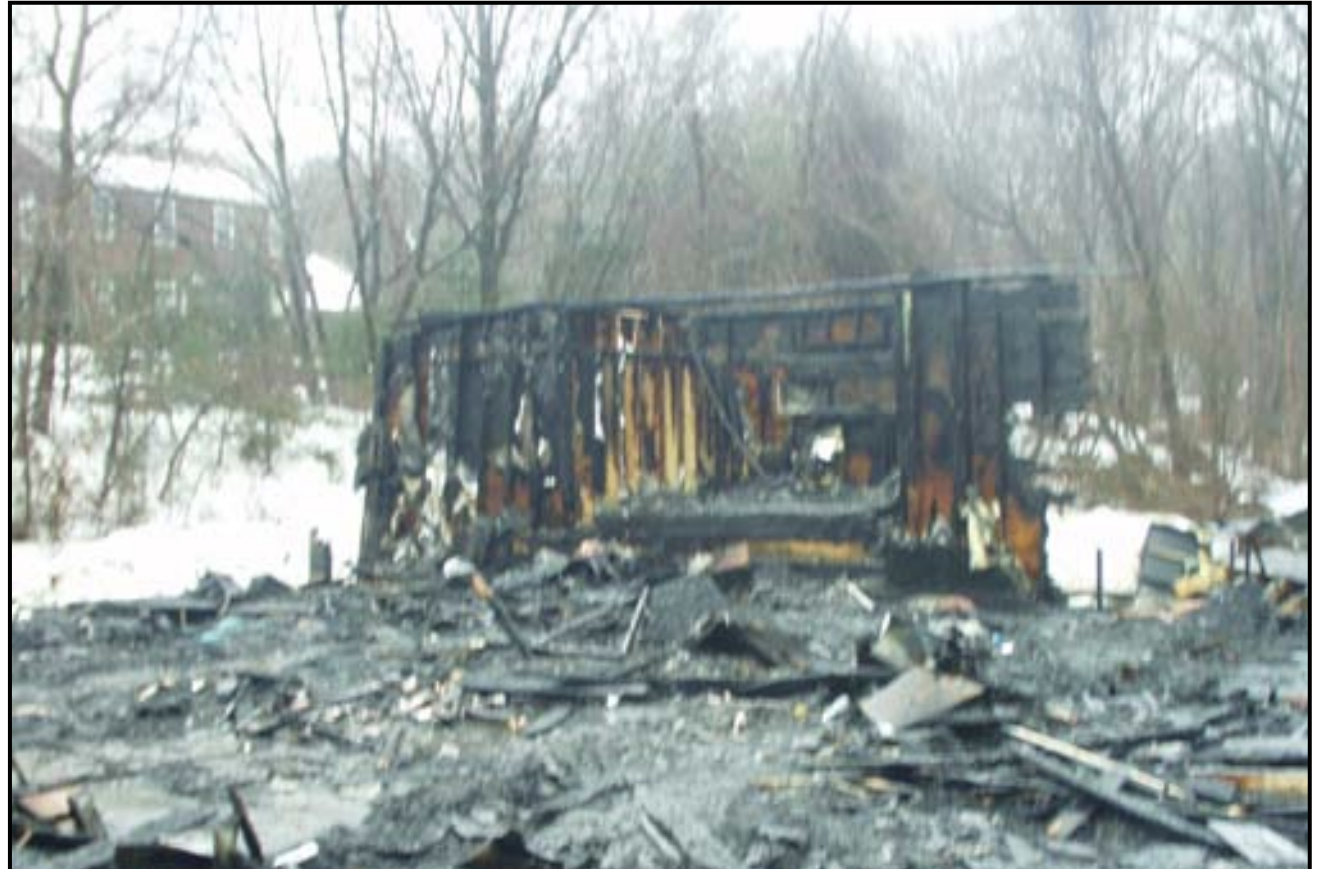
Remains of the stage of The Station Nightclub, after the fire: NIST
Other Useful Links
Major American Fires: University of Illinois Urbana-Champaign
NFPA Case Study: Nightclub Fires
Human Behavior in Fires
Occupant behaviour and evacuation: [pdf]: G. Proulx
‘Panic’ and human behaviour in fire: [pdf] R F Fahy, G Proulx
panic: myth or reality?: Lee Clarke
Human Behaviour in Fires: [pdf] Jonathan D Sime
The Process of Human Behavior in Fires: [pdf] NIST
Sign up for my free monthly newsletter and never miss a writing article! Or subscribe by RSS